🛣️
A route is not a spreadsheet
Distance, payload, weather, traffic, and day-to-day variability can turn a route that looks viable on paper into a bad operational call.
Comparing TCO or energy cost is not enough. The real question is which part of your operation can move to EV today, what your current depot can support, and when infrastructure starts getting in the way of growth.
BaseFit helps structure that decision to reduce friction and operational risk.
What fits today. What the depot can handle. When to scale.
Fleet electrification rarely fails on price alone. It fails when the real operation, depot constraints, and day-to-day limits are not properly accounted for.
Distance, payload, weather, traffic, and day-to-day variability can turn a route that looks viable on paper into a bad operational call.
A vehicle may look right on paper and still be difficult to deploy if available power, charging windows, or operating discipline do not support it.
Sometimes the real limit sits in the infrastructure, overlapping charging demand, or the way vehicles and routes are assigned.
Oversizing too soon puts pressure on cash and weakens the decision. Expansion makes sense when the operation truly demands it.
The point is not to ask whether a fleet should electrify in theory. The point is to know which routes fit today, which vehicle makes sense, what the depot can support, and what needs to change before scaling further.
Shows which part of the operation can move to EV with enough margin, without planning for the best-case day or assuming ideal productivity.
Helps match the right EV to each route based on usable range, payload, operational demand, and real operating margin.
Assesses how many EVs the depot can handle with the available power, chargers, shifts, and charging windows.
Helps identify the point where adding chargers, power, or site capacity stops being optional and starts becoming necessary.
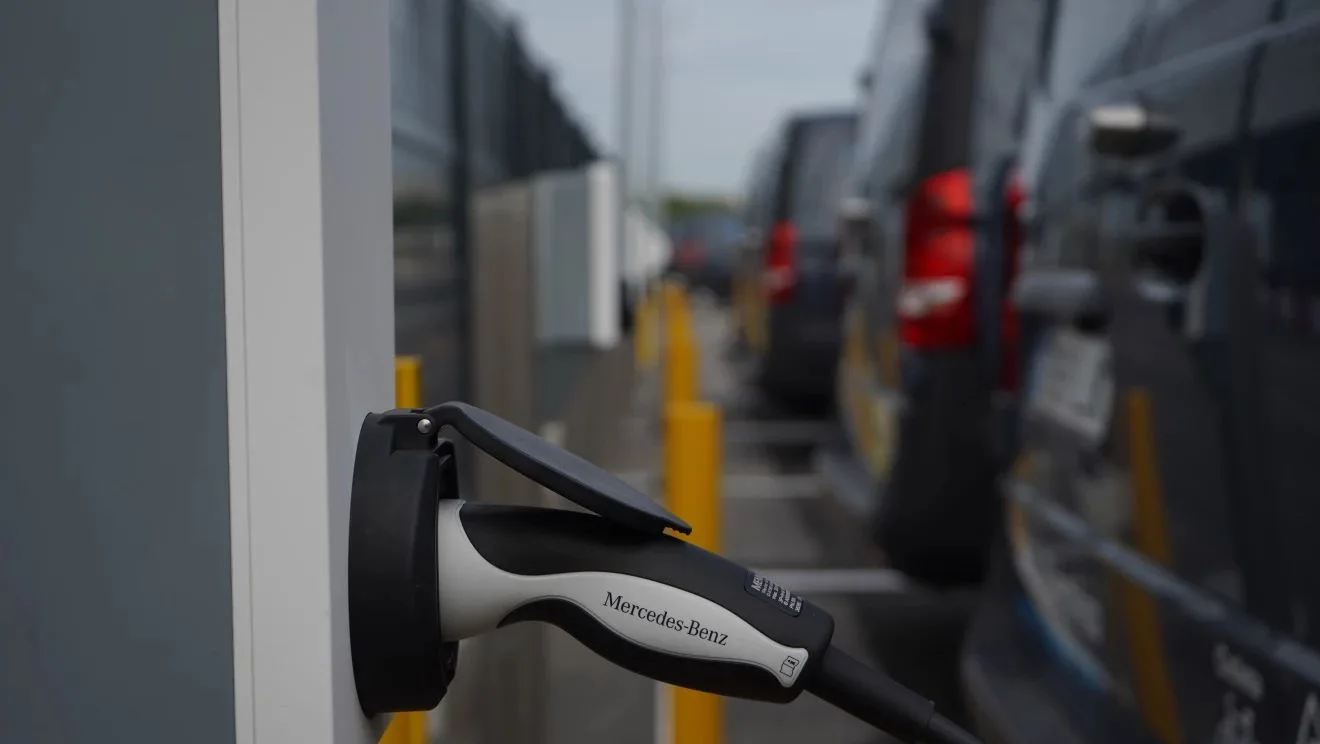
BaseFit does not replace operations. It gets them ready. It helps reduce uncertainty before buying vehicles, deploying them, or expanding infrastructure, and connects that decision to the day-to-day reality of the fleet.
The fixed-scope assessment analyses one depot, a vehicle sample and representative routes to identify what can be electrified first, what constrains the operation and what should be validated before procurement.
Route Fit, Vehicle Fit, Depot Fit and Scale Fit as a methodology for deciding and scaling.
Decision-ready report, results matrix and a recommended first phase from €950 + VAT.
It helps you see whether a case is worth pursuing, compare scenarios, and put some early operational and financial logic on the table.
The real decision still depends on routes, depot constraints, charging windows, charger overlap, infrastructure, and operating discipline. That is why it works as an entry point to BaseFit, not as a replacement for proper analysis.
It helps you see whether a case deserves a closer look before spending more time and effort.
You can compare assumptions early without modeling the full operation from day one.
It helps start the conversation with clear assumptions and numbers, not just gut feel.
The value is not just in making a better decision. It is in being able to run that decision afterwards with less improvisation, lower risk, and one shared view of the fleet.
Electrification should not stop at a report. It needs to connect with real visibility over vehicles, charge status, incidents, and actual availability.
It helps teams decide which vehicle can cover which route, and when available charge is no longer enough to operate safely.
This is where good electrification planning pays off most: repetitive operations, depot-based fleets, and daily operational pressure.
This is where the link between route, depot, charging, incidents, and productivity is easiest to see. A decision that looks good on paper can either hold up here or break down in day-to-day operations.